

Editorial review: November 12, 2026
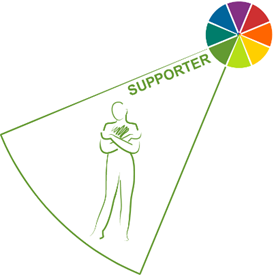
Supportive colleagues help make a workplace a place where people can ask questions and discuss concerns. The Supporter profile gives language to preferences for consideration, dependable relationships and a steady approach. It does not mean every Supporter behaves alike or that other preferences cannot be supportive.
Supporter is a role name in the modern Insights Discovery eight-role framework. It is not a precise Jungian category called “Introverted, or Sensory, Feeler.” Attitudes, functions and modern role names should not be treated as interchangeable labels.
Supporter preferences
Someone who recognizes this profile may value consistency, appreciation and time to understand a change. Those preferences can help a team notice the human effect of a decision. They do not prove loyalty, mediation skill or reliable delivery; those qualities need their own evidence.
Ask what support means for the person. They may want clearer priorities, a private conversation, a practical demonstration or simply enough time to prepare. Avoid assuming that reassurance alone answers a genuine concern about the work.
Make change predictable
Advance notice can help when a process or responsibility is changing. Explain why the change is happening, what is decided and what remains open. Invite questions before the implementation date where possible, and say how unanswered concerns will be handled.
An illustrative announcement might be: “From Monday we will use one shared project tracker. The approval owner stays the same. We will practice the new steps on Thursday, and I will collect questions before then.” That makes the change easier to discuss without promising that everyone will welcome it immediately.
The aim is preparation, not sheltering someone from every challenge. A preference for stability does not mean a person cannot lead change or work under pressure. Explore the actual support needed and agree a realistic next step.
Discuss concerns and responsibilities
In meetings, give people room to finish a thought and invite views that differ from the apparent consensus. Silence may reflect agreement, uncertainty or a wish to think further. Check rather than guess.
Keep appreciation specific: identify the contribution and its effect. Also discuss deadlines and responsibilities directly. Care for relationships and clear expectations belong together; avoiding a difficult conversation may leave the colleague with less useful information.
Read the Earth Green energy guide and the eight personality types overview, or explore team building to practice communication during change.